Your First Rigid Heddle Project: A Real Warp Walkthrough
A complete first-warp walkthrough: yarn quantities for a 15-inch Cricket or SampleIt, a weekend scarf plan, and the five things beginners get wrong.
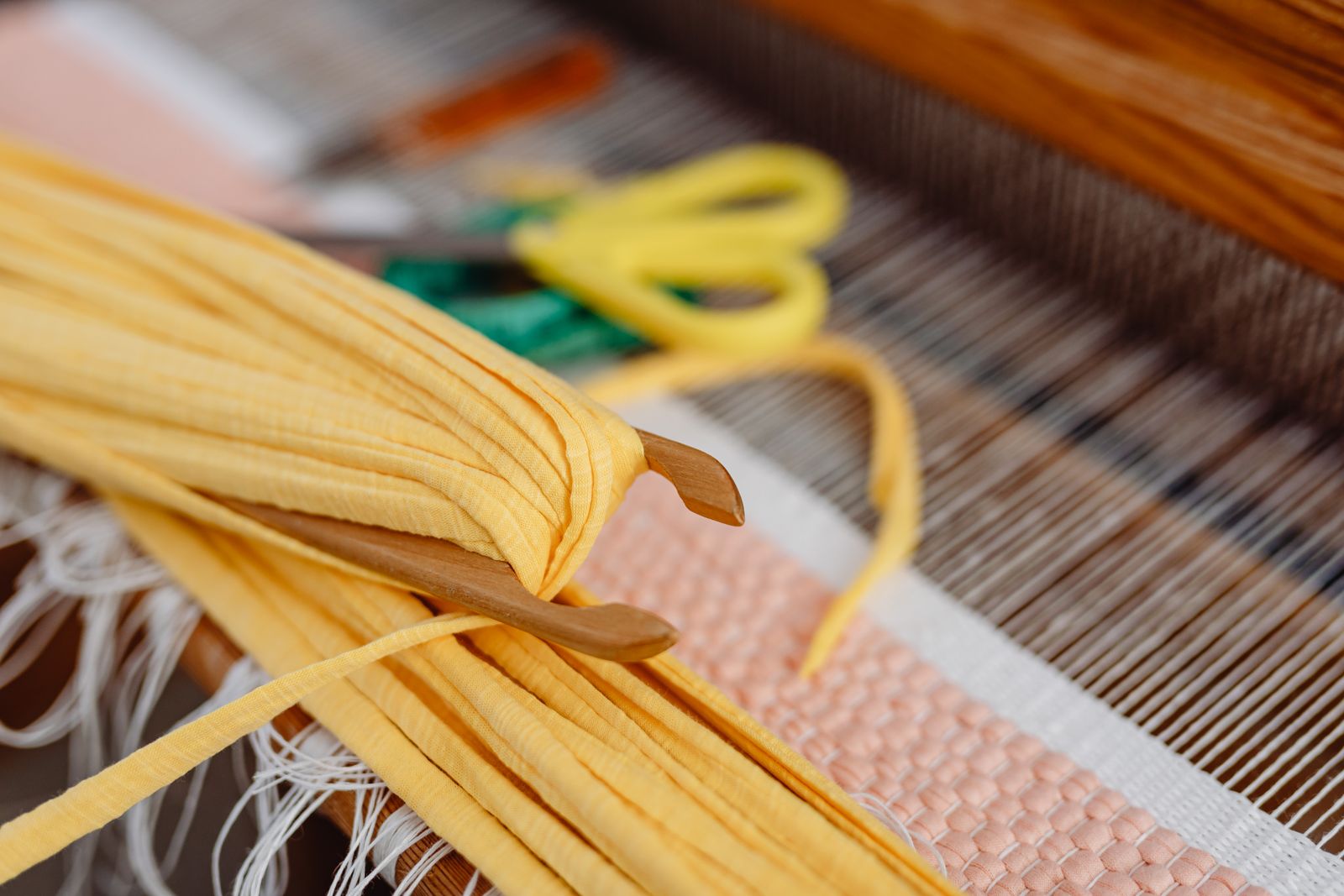
For a first scarf on a 15-inch Schacht Cricket or 16-inch Ashford SampleIt, plan on roughly 200 yards of warp yarn, 300 yards of weft yarn, an 8-dent reed, one afternoon to warp, and one afternoon to weave. Choose a smooth, non-slippery DK or worsted yarn and weave plain weave.
The yarn amounts below are specific, the math is real, and the five things beginners get wrong are listed at the end in order. This walkthrough assumes you have a loom assembled and no experience weaving.
What do you need before you start?
You need a loom with an 8-dent reed, smooth DK or worsted warp and weft yarn, two stick shuttles, a yarn needle, and scissors. That is the whole list. The Cricket 15-inch and SampleIt 16-inch both ship with their respective 8-dent reed. If yours came with a 7.5-dent reed (Ashford models), the math below still holds.
Warp yarn: smooth, consistent, non-slippery DK or worsted weight wool, cotton, or wool-blend. About 250 yards to be safe (200 plus waste). The specific project below uses DK weight at approximately 250 yards per 100-gram skein.
Weft yarn: the same or a coordinating yarn. You have more flexibility here: the weft does not take the same stress as the warp, so slightly textured yarn is fine. 300 yards is plenty for the project below.
Two stick shuttles (come with Cricket and SampleIt). A yarn needle and scissors.
That is the complete list for your first warp.
What is the best first rigid heddle project?
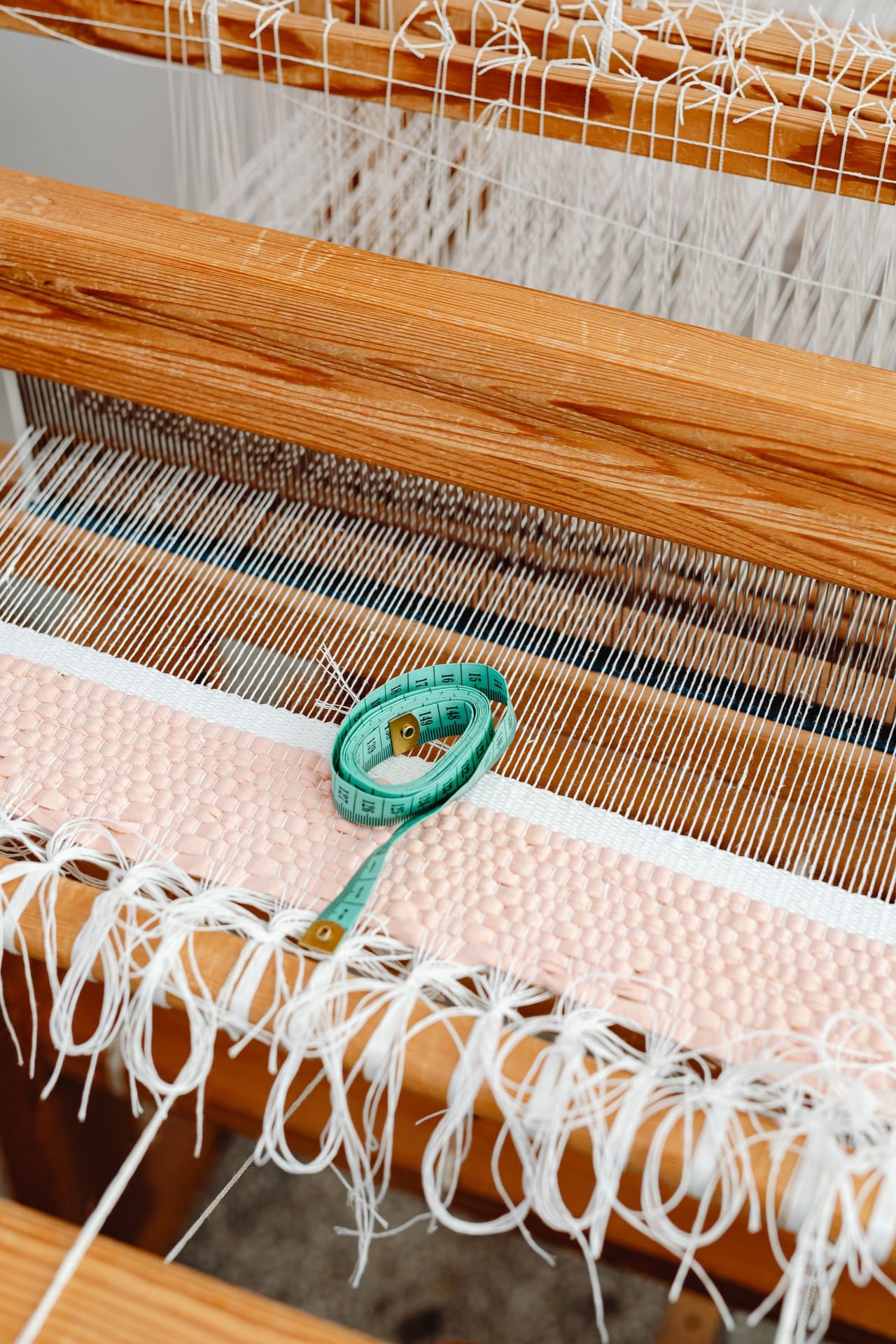
A plain-weave scarf is the best first project. Not a complex weft pattern, not a project that requires two heddles. Just a scarf.
Finished dimensions (before washing): 6 to 6.5 inches wide, 62 to 65 inches long. Finished dimensions (after washing): roughly 5 to 5.5 inches wide, 56 to 60 inches long (wool blooms and contracts about 8 to 10% in washing).
Warp plan:
- Warp width: 7.5 inches in the reed (for a Cricket 15-inch, use the center)
- Reed: 8-dent
- Ends per inch: 8
- Total warp ends: 7.5 × 8 = 60 ends
- Warp length: 2.5 yards (90 inches), which yields about 62 inches of weaving after loom waste
- Warp yarn needed: 60 ends × 90 inches = 5,400 inches = 150 yards, round up to 180 yards with margin
Weft plan:
- Weft picks per inch: 8 (matching sett for balanced weave)
- Total weft length: 62 inches × 8 picks × 8 inches (width) = 3,968 inches = 110 yards, round up to 160 yards with sampling and turns
Both can come from one 200-yard skein if you wind one yard from the skein for warp sampling, then use the rest for weft.
How do you warp a rigid heddle loom?
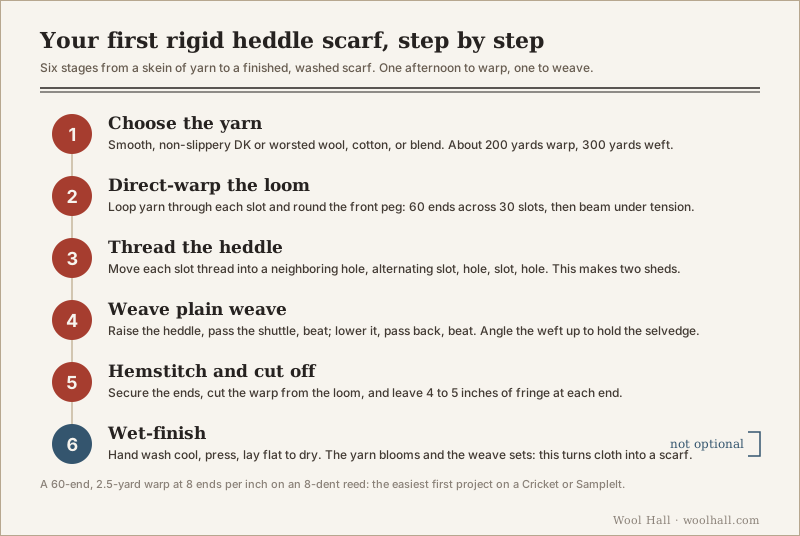
Direct warp it: thread the yarn through each slot and around the front peg, then beam it onto the back. There are two standard methods, direct warp (warp directly onto the loom, using the rigid heddle as a warping peg) and indirect warp (warp onto a warping board, then thread through the heddle and tie on). For a first project, direct warp is easier and faster.
Direct warping, step by step:
Set up the loom on a table. Tie the warp yarn to the back beam with a slip knot.
Bring the yarn down through the first slot in the reed (not a hole, the open slot between heddle bars). Continue to the front beam peg, loop around it, and come back up through the same slot. You have just added two warp ends in that slot.
Move to the next slot. Repeat: down through the slot, around the front beam peg, and back up. Continue across all 60 ends (30 slots).
When all slots are threaded, cut the yarn and tie to the back beam. Wind the warp onto the back beam by rotating the back beam and turning the ratchet forward, maintaining light tension on the yarn as you wind.
Once the warp is wound, you have a slot-threaded loom. Threading the holes happens next: take each yarn from a slot and thread the neighboring hole, alternating slot-hole-slot-hole across the reed. This is the process that creates the two sheds.
Tie the warp ends to the front beam in small bundles, distributed evenly across the full width. Adjust tension until the warp feels firm and consistent under your fingers.
The whole warping process for 60 ends takes 45 to 90 minutes the first time. The second warp takes half as long.
How do you weave plain weave on a rigid heddle?
Raise the heddle and pass the shuttle through, then lower it and pass back: each pair of passes is one row of plain weave. Once the warp is tied on:
Creating sheds: Push the heddle up. The threads in the slots rise; the threads in the holes stay. This is shed 1. Pass the shuttle through. Push the heddle down. The threads in the holes drop; the slots stay. This is shed 2. Pass the shuttle back through. That is one complete pass in plain weave.
Beating: after each pass of the shuttle, bring the heddle forward firmly to press the weft into the cloth. The heddle itself acts as the beater. Consistent beating makes even cloth.
Selvedges: the biggest quality challenge for beginners is keeping the edges neat. Angle the weft yarn slightly upward across the shed (at roughly 30 to 45 degrees) before beating down, rather than pulling the yarn tight and straight across. The extra length keeps the selvedge threads from drawing in and making the cloth narrower with each row.
Weave until you run out of warp or reach your desired length. For the project plan above, you will weave about 62 to 65 inches of cloth. Budget a few rows of scrap yarn at the start and end as a header that holds the cloth together for finishing.
How do you finish a handwoven scarf?
Cut it off the loom, secure the ends, then wet-finish it. Cut the warp from the loom, leaving 4 to 5 inches of fringe at each end if desired, or enough length to tuck in.
Wet finishing: hand wash in cool water with a small amount of wool wash. Press gently. Do not wring. Lay flat on a towel. Stretch gently to even dimensions, then leave to dry flat for 12 hours. This step blooms the yarn fibers and sets the weave permanently.
After washing, trim fringe to a consistent length or hem the ends with a tapestry needle.
Five things beginners get wrong, in order
1. Tension while winding the warp. Too loose and the warp sags, making an uneven shed. Too tight and the loom will flex and the warp breaks. Aim for consistent and firm, like strumming a guitar string, not tugging at it.
2. Drawing in the selvedge. Pulling the shuttle straight across without angling the weft first narrows the cloth with every row. A scarf that starts 7 inches wide and ends 5 inches wide at the far end is the result. Angle up, then beat.
3. Beating inconsistently. Some picks beaten hard, some lightly. The result is cloth with visible stripes of open and closed weave. For plain weave, consistent moderate pressure on every beat.
4. Skipping the header. The first few rows hold the warp spread at the right width. Without a header, the outside warp ends pull inward. Weave 5 to 10 rows of scrap yarn before the real weft to set the warp spacing.
5. Not washing the finished piece. A newly woven scarf looks like a fabric sample: stiff, slightly rough, warp ends visible. Wet finishing is not optional. It is what makes the cloth into a garment.
When the scarf is done, you will know how warp tension feels under your hands, what consistent beating sounds like, and what a well-set selvedge looks like. The second project starts with all of that.
From here: see which loom the best rigid heddle guide recommends for your next width, or read the Ashford rigid heddle review if you are still deciding between brands. The Schacht Cricket review covers the Cricket’s assembly and accessory ecosystem in detail.