Drum Carder Guide: The $600+ Tier and the Used Market
Ashford, Louet, and Strauch drum carders at the $600-plus tier: teeth-per-inch counts, availability notes, and where the used market beats buying new.
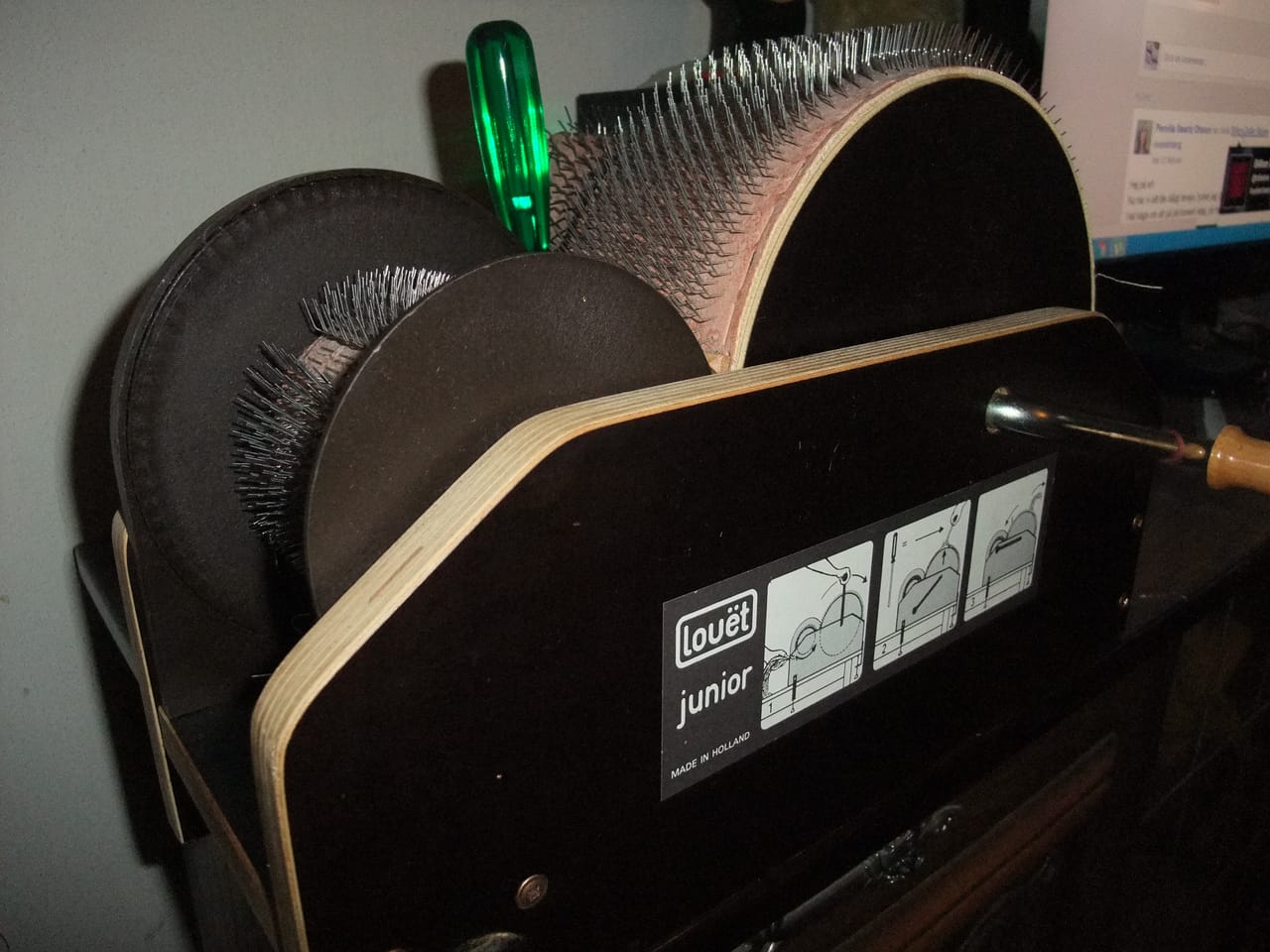
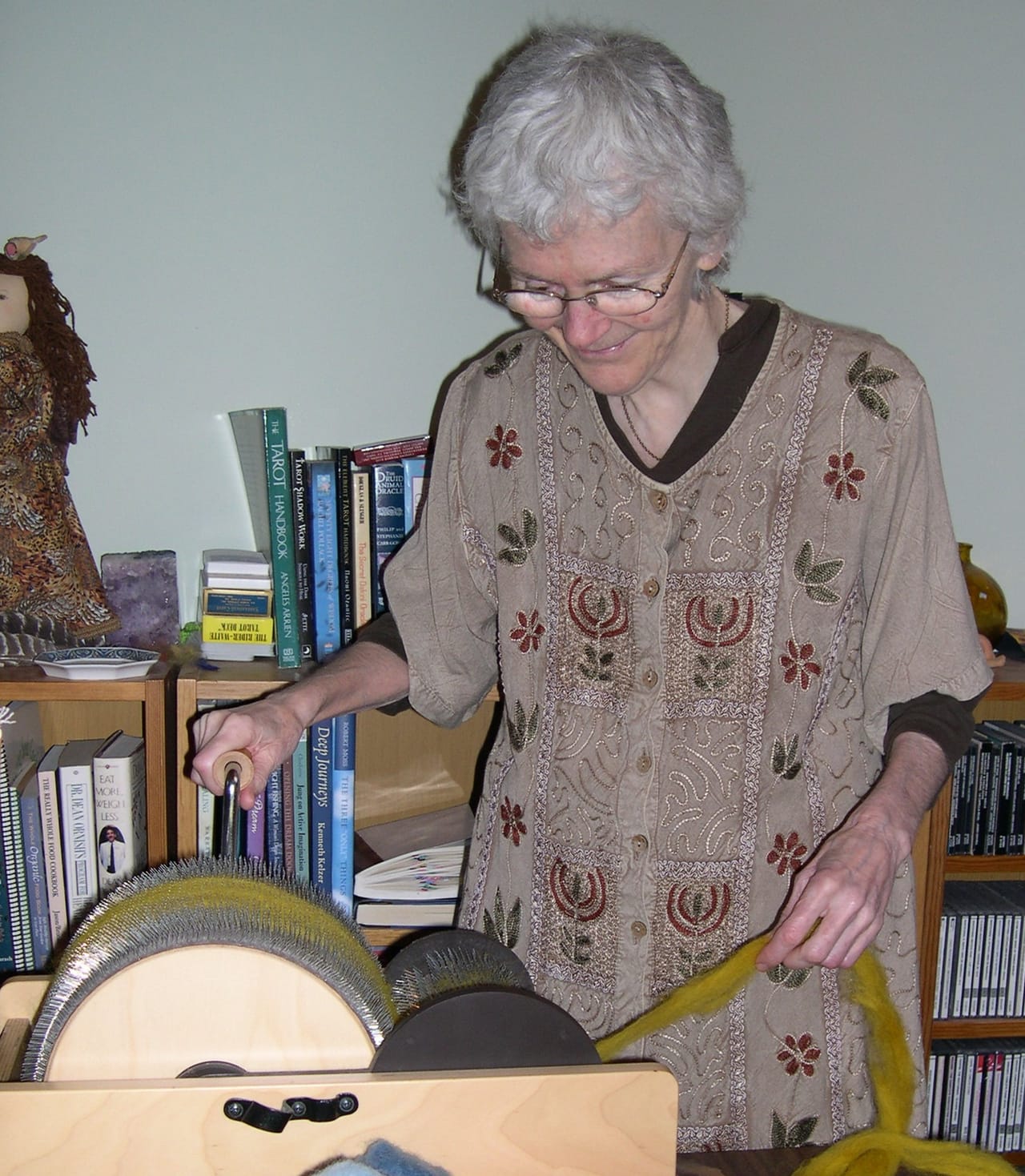
A drum carder turns raw fleece, roving, or fiber blends into spinning batts. At the $600-and-up tier you get consistent teeth-per-inch cloth, robust construction, and a tool that outlives its owner. But most experienced buyers find the best value on the used market, where carders sell at 40 to 60 percent of new.
Below $300, a carder is functional but not smooth. This guide covers the $600-and-up field (Ashford, Louet, and Strauch) and the used market where those same tools resell cheaply, since a well-maintained carder from 2005 produces the same batt as a new one.
How many teeth per inch do you need?
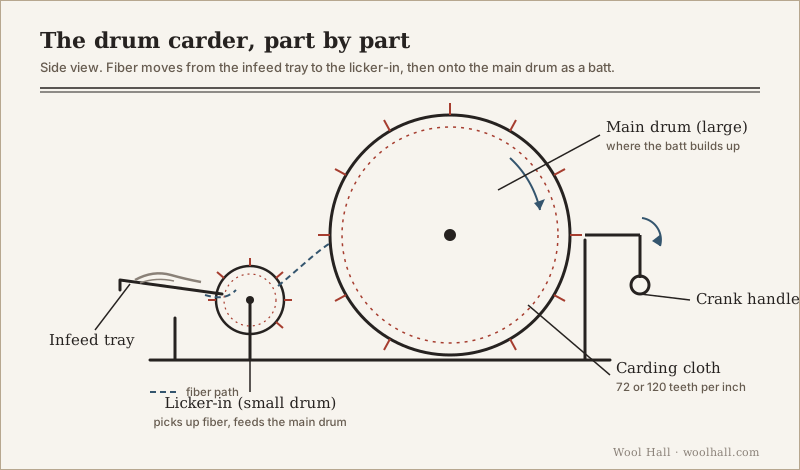
For most spinners, 72 teeth per inch is the right answer, and never anything else. The critical spec is teeth per inch (tpi, sometimes called dpi for “dents per inch”): it determines which fibers the carder handles well and how smooth the resulting batt will be.
72 tpi: the all-purpose standard. Handles Corriedale, Merino blends, BFL, Rambouillet, and most mid-staple wool. Produces smooth batts from prepared fiber and usable batts from clean raw fleece. This is the right tpi for most spinners.
120 tpi (fine cloth): for high-grade Merino, cashmere, fine alpaca, and blending fine fibers with silk. Produces a silkier batt from very fine fiber that a 72 tpi carder handles less smoothly. Most spinners do not need 120 tpi until they are working regularly with sub-18 micron fiber.
48 tpi or lower: for coarse wools, raw fleece with vegetable matter, and fibers that benefit from more aggressive opening. Not covered here; this is a specialty tool for specific work.
Which drum carders fill the $600-and-up tier?
Three brands dominate this tier: Ashford (the most available), Louet (gear-driven, often out of stock), and Strauch (American-made, durable). Any of the three produces high-quality batts; the choice usually comes down to availability and dealer proximity rather than results.
Ashford Drum Carder (72 tpi Standard), $700 to $750. Ashford’s standard model is the most widely available drum carder in the US market. The double-drive band system is responsive and repairable; replacement cloth and bands are available directly from Ashford. The Standard produces good batts from most wool types, handles small amounts of dyed fiber blending, and is the default recommendation for spinners who do not have a specific specialty-fiber need.
The Ashford Fine Cloth model (120 tpi) runs slightly more and is the choice if your primary work is fine Merino and cashmere. Ashford also makes a motorized drum carder at higher price, a genuine time-saver for spinners processing large amounts of raw fleece.
Louet S10 and S17. Louet’s gear-driven carders are consistently cited as producing a smoother, more consistent action than comparable band-driven models. The gear drive wears more slowly and the action stays predictable over years of use. The S10 (smaller drum, portable) and S17 (standard production size) are both high-quality tools.
Availability note as of June 2026: Louet carders are intermittently out of stock across US retailers including The Woolery, Paradise Fibers, and Halcyon Yarn. If a Louet is available when you are buying, it is an excellent choice. If out of stock, the Ashford Standard is not a step down in results; it is simply a different mechanism.
Strauch drum carders (Petite, Standard, Jumbo). Strauch Fiber Equipment makes American-manufactured drum carders with a dedicated following. The Strauch Petite is a compact 72 tpi carder for fine work; the Standard handles production carding; the Jumbo processes wide batts. Strauch carders have a strong reputation for durability and precise alignment of the carding drums.
Availability note: the Strauch website (strauchfiber.com) returned connection errors at time of verification in June 2026. Check current retailer availability before ordering. US dealers include Paradise Fibers and select weaving shops.
Should you buy a drum carder used instead of new?
Usually yes, if a sound one is available. Drum carders are mechanically simple. The only wearing parts are the carding cloth (which can be replaced) and the drive system. A well-maintained Ashford, Strauch, or Louet carder from 2005 produces the same quality batt as a new one. This makes the used market unusually strong for buyers.
Typical used prices observed 2024 to 2025:
- Ashford 72 tpi Standard: $250 to $450 (new ~$700)
- Louet S17 complete: $300 to $500 (new, when available, ~$700+)
- Strauch Standard: $300 to $500 (new ~$700+)
- Entry-level carders (non-brand or early Ashford models): $100 to $200
Where to find used drum carders: Ravelry’s For Sale & Swap forum is the primary US market. Spinners who upgrade to motorized carders, reduce their equipment, or settle estates regularly list drum carders there. Facebook Marketplace in fiber-arts groups is the secondary market. WEBS (Valley Yarns) and some regional weaving guilds maintain used equipment lists.
What to inspect before buying used: the carding cloth for bent or missing teeth, especially on the large drum. Run your hand along the cloth; missing teeth feel like gaps in a comb. The alignment of the drums (they should be close but not touching). The drive mechanism, if band-drive, for fraying. A drum carder with worn cloth but sound drum alignment can have its cloth replaced by Ashford or a specialty supplier for $80 to $150, making a $200 used body a reasonable purchase.
Who actually needs a drum carder?
You need one if you card more than two or three ounces of fiber per week, blend your own colors or fiber types, or work with raw fleece that needs opening before spinning. If you buy mostly prepared roving and spin directly from the preparation, you do not need a drum carder. A set of hand cards ($30 to $60) is sufficient for the fiber adjustment work most spinners do.
The drum carder is not a beginner tool. It comes into its own when a spinner has developed enough technique to know what kind of preparation they want, and enough fiber volume that hand carding has become the bottleneck. The drop spindle guide, the umbrella swift guide, and the best rigid heddle loom guide cover the adjacent tools in a fiber-arts studio setup.