Schacht Baby Wolf vs Wolf Pup LT: Floor Loom Comparison
Wolf Pup LT at $1,963 and 18 inches vs Baby Wolf at $2,386 and 26 inches: specs, weight, upgrade path, and a clear verdict. Verified June 2026.

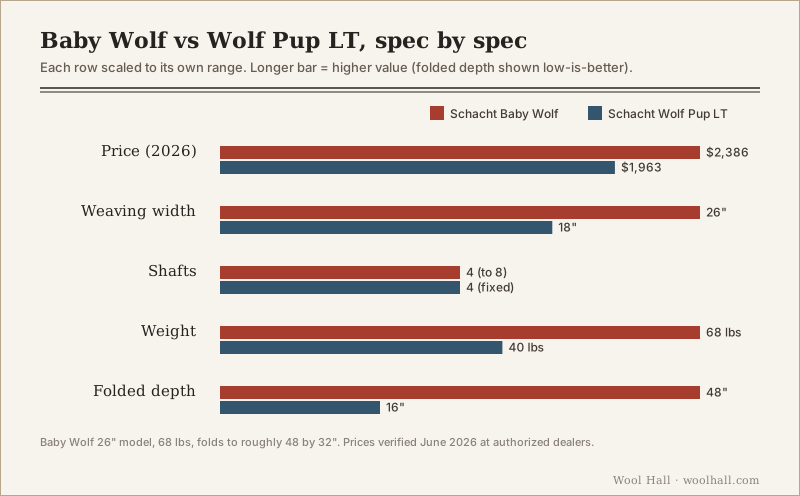
Buy the Wolf Pup LT ($1,963, 18 inches) for narrow work in tight spaces; buy the Baby Wolf (from $2,386, 26 inches) if you might ever want more width or 8 shafts. The $423 difference buys 8 more inches, a heavier frame, and an upgrade path the Wolf Pup lacks.
Both are mechanically the same loom: 4-shaft, 6-treadle, hard maple, direct tie-up, folding for storage. Only the Baby Wolf accepts the Four-Now-Four-Later conversion to 8 shafts. Prices verified June 2026 at Schacht’s website and authorized dealers.
| Spec | Wolf Pup LT | Baby Wolf (26”) |
|---|---|---|
| Weaving width | 18” | 26” |
| Price (2026) | $1,963 | From $2,386 |
| Weight | 40 lbs | ~68 lbs |
| Folds to | 16” deep | ~48” × 32” |
| Shafts | 4 (fixed) | 4 (upgradeable to 8) |
| Treadles | 6 | 6 |
| 8-shaft upgrade | No | Yes (Four-Now-Four-Later) |
| Wheels included | Yes (built-in) | No |
| Construction | Hard maple | Hard maple |
| Dealer-only | Yes | Yes |
Who should buy which Schacht floor loom?
The two looms serve two different weavers, and the split is rarely ambiguous.
Buy the Wolf Pup LT if: you weave primarily narrow things (scarves, kitchen towels, table runners, narrow garment panels) and your space cannot absorb a standard-footprint floor loom. The Wolf Pup’s 16-inch folded depth means it disappears behind a door. Its 40-pound frame, with built-in wheels, means one person can move it without planning a lifting operation. At $1,963, it is the entry point for a real 4-shaft floor loom that fits an apartment.
Buy the Baby Wolf if: there is any chance at all you will want more than 18 inches. Kitchen towels at 18 inches are weaveable. Bath towels are not. A blanket panel needs at least 26 inches to make seaming practical. And if you might eventually want structures that need 8 shafts (doubleweave, complex overshot, block weaves), the Four-Now-Four-Later upgrade exists only on the Baby Wolf. The $423 price difference, paid once, is far less than selling the Wolf Pup and buying the Baby Wolf later.
The one scenario where the Wolf Pup LT is plainly correct: a weaver who already owns a Baby Wolf or equivalent and wants a compact second warp station for narrow work. As a narrow production machine alongside a full-width loom, the Wolf Pup is a genuine solution rather than a compromise.
What can you weave on an 18-inch loom?
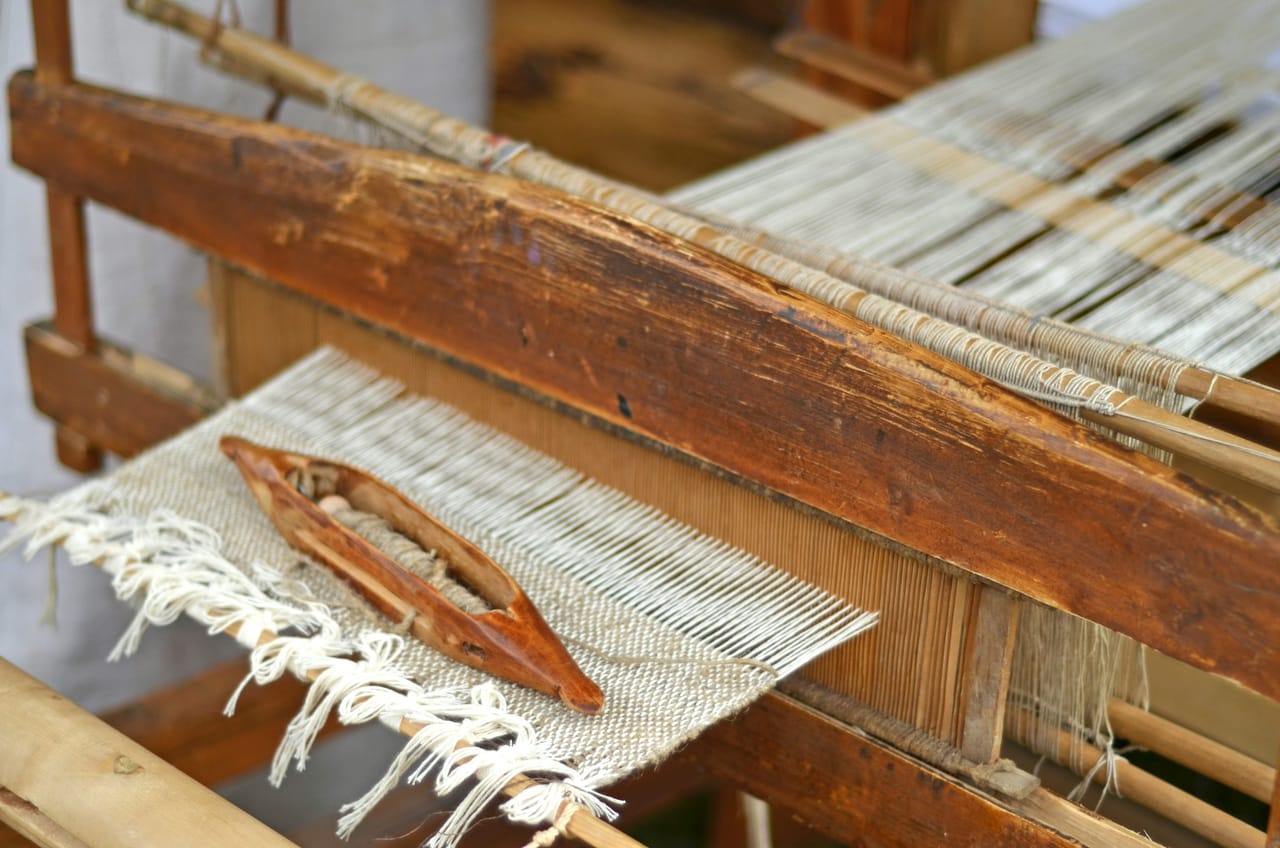
An 18-inch weaving width handles scarves, kitchen towels, table runners, and garment yardage, but not bath towels, full shawls, or wide blanket panels. The ceiling is real for specific project types, not a technicality.
What works at 18 inches: scarves (typically 7–14 inches wide off the loom), kitchen towels (standard US size is 18 × 28 inches, exactly at the limit), table runners in narrower designs, yardage for garments cut in small pieces, and sampler projects. An 18-inch weaving width is not a toy. Many production weavers make a living on narrower looms, weaving scarves and towels exclusively.
What does not work at 18 inches: bath towels (need 26–30 inches), blanket panels wide enough to panel without excessive seaming, most shawls designed to wrap across the shoulders (need 24–32 inches off the loom), and side-by-side double production warps. Kitchen towels at 18 inches work, but the margin is small; your sett and take-up need to cooperate to land at the right finished width.
The question is not whether 18 inches is a meaningful weaving width. It is whether 18 inches is what you will want to weave permanently, versus what you will weave until you know more. Weavers moving from a rigid heddle loom, whether from the Cricket or an Ashford, often discover after the first year that their project ambitions run wider.
What is the Baby Wolf’s Four-Now-Four-Later upgrade?
Four-Now-Four-Later lets you buy the Baby Wolf as a 4-shaft loom now and add a second 4-shaft unit later, reaching 8 shafts on the same frame. The Baby Wolf carries this upgrade path the Wolf Pup LT does not. The name is the mechanism: you start in the standard 4-shaft configuration, and when you need more structural complexity you bolt on the second unit. Total shafts become 8, on the loom you already own, without replacing anything.
Eight shafts opens structures that 4 shafts cannot reach: doubleweave on alternating blocks, true 8-shaft twills, more complex overshot blocks, shaft-controlled network drafts. Weavers who start in plain weave and move toward twill and more complex drafts often reach the edges of 4-shaft weaving within a few years of serious work.
The Four-Now-Four-Later is not a gimmick. Schacht designed the Baby Wolf frame from the beginning to accept the extension; it is not a retrofit. The upgrade does add cost and complexity; eight-shaft looms require more tie-up planning and more treadle coordination. But for a weaver who expects to keep a floor loom for a decade or more, the eight-shaft ceiling is a meaningful long-term consideration.
The Wolf Pup LT will always be 4-shaft and 18 inches. That is a design choice, not a defect (it keeps the price and footprint down), but it is permanent.
How much do these looms weigh, and how do they store?
The Wolf Pup LT weighs 40 lbs and rolls on built-in wheels; the Baby Wolf 26-inch weighs 68 lbs and moves as a two-person job. The 28-pound gap and the Wolf Pup’s compact fold are the real practical differences. Neither is a one-handed lift.
The Wolf Pup LT has built-in wheels. Fold the X-frame to its 16-inch depth and it rolls. One person in an average apartment can move it without planning, without a second person, without a dolly. The 16-inch folded depth fits behind a standard interior door or inside a large closet.
The Baby Wolf folds to approximately 48 × 32 inches, roughly the footprint of a large suitcase on its side. It passes through a 30-inch doorway. It does not roll on its own, and most Baby Wolf owners move it as a two-person job when they need to. The typical approach is to set it up in one location and leave it: the fold is for moving to a new apartment, not for daily storage.
For the weaver who expects to move frequently, shares a studio, or needs the loom stored between sessions, the Wolf Pup’s compact fold is a genuine feature. For the weaver who will set it up and leave it, the Baby Wolf’s larger folded footprint is irrelevant.
Should you consider the Louet David instead?
Yes, look at it before deciding on price alone. The Louet David is a 4-shaft folding floor loom from a different manufacturer in a similar price range. If the Baby Wolf’s price is the constraint rather than the size, comparing the David to the Baby Wolf is more useful than defaulting to the Wolf Pup LT as a cheaper Schacht alternative.
Which one to buy
Both looms are well-made, both sell at consistent prices through dealers, and both will produce good cloth for as long as you weave on them. The question is width, weight, and upgrade path.
Choose the Wolf Pup LT ($1,963) if:
- Your permanent output is narrow work: scarves, kitchen towels, table runners, narrow yardage
- Your space genuinely cannot store a 26-inch loom: apartment, shared studio, small house
- You already own a wider loom and want a compact second machine
- You are certain you will not want 8 shafts or more than 18 inches
Choose the Baby Wolf (from $2,386) if:
- You want 26 inches now or suspect you might later
- You may want 8 shafts via Four-Now-Four-Later at some point
- You plan to weave bath towels, blanket panels, shawls, or wider garment yardage
- You are moving from rigid heddle to floor loom and are unsure of your width needs
The most common regret among weavers who chose the Wolf Pup as a first floor loom: buying it to try floor loom weaving without committing, then needing 26 inches within two years. If that path sounds familiar before you have even bought the loom, that is a signal. The Schacht Baby Wolf at $2,386 costs $423 more than the Wolf Pup LT. Selling a used Wolf Pup and buying a Baby Wolf costs considerably more than $423.