Schacht Baby Wolf vs Louet David III: Floor Loom Comparison
Baby Wolf at $2,386 (4 shafts) vs Louet David III at $5,087 (8 shafts): treadle feel, depth, and when the price gap is worth it. Verified June 2026.
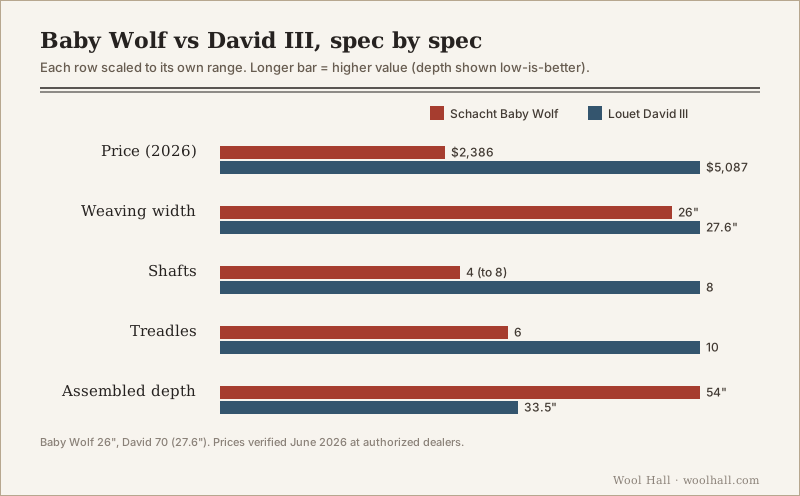
The Baby Wolf is a 4-shaft hard maple loom at $2,386; the Louet David III is an 8-shaft beech loom from $5,087. That $2,701 gap buys four more shafts, twenty fewer inches of depth (33.5 versus 54), and a lighter spring-assisted treadle. Choose the Baby Wolf for 4-shaft weaving on a budget, the David III for 8-shaft studio work.
The same decision in longer form: what floor loom do you buy when you are serious about weaving? The Baby Wolf is a rising-shed jack loom that assembles to 54 inches deep. The David III is a sinking-shed spring jack loom that assembles to 33.5 inches deep. Prices verified June 2026 at authorized dealers.
| Spec | Baby Wolf (26”) | David III (David 70, 27.6”) |
|---|---|---|
| Weaving width | 26” | 27.6” (70 cm) |
| Price (2026) | $2,386 | $5,087 |
| Shafts | 4 (upgradeable to 8) | 8 |
| Treadles | 6 | 10 |
| Assembled depth | 54” | 33.5” |
| Weight | ~68 lbs | ~66 lbs |
| Mechanism | Rising-shed jack | Sinking-shed spring jack |
| Material | Hard maple | Lacquered beech |
| Origin | USA (Boulder, CO) | Netherlands |
| Availability | Dealer stock | 16–18 week lead time |
| 8-shaft path | Four-Now-Four-Later upgrade | Standard configuration |
What can four shafts weave, and where do they stop?
Four shafts cover most of the weave structures that weavers actually use. Plain weave and its variations, four-shaft twills, huck lace, turned twill, simple overshot, log cabin, rep weave, summer-and-winter: all of these are within reach on a Baby Wolf. Plenty of studio weavers who spend their careers on one loom produce nearly everything they want from 4 shafts and never hit the ceiling.
What 4 shafts cannot reach: deflected doubleweave with more than four pattern blocks, true 8-shaft twills that exploit all eight possible shed combinations, networked drafts requiring independent shaft groups beyond four, and certain complex overshot block structures. These are not beginner territory. A weaver who needs them generally knows it. The question at purchase is whether you currently weave those structures or realistically expect to within the loom’s life.
The Baby Wolf’s answer to the shaft-count question is the Four-Now-Four-Later upgrade: a second 4-shaft unit that attaches to the existing frame, extending total shafts from 4 to 8 without replacing the loom. Schacht designed the Baby Wolf frame from the start to accept this extension. It is not a retrofit. If you buy the Baby Wolf and later find yourself at the edge of 4-shaft complexity, the upgrade path exists on the same hardware.
The David III arrives with 8 shafts and 10 treadles already installed. You do not add to it; you sit down and draft 8-shaft patterns from the first warp.
Which loom takes up less room, the Baby Wolf or the David III?
The David III, by about 20 inches of depth. The Baby Wolf assembles to 54 inches deep. The Louet David III (David 70 and David 90 models) assembles to 33.5 inches. That is a 20.5-inch difference, roughly the width of a standard interior door.
In practice: a Baby Wolf needs at least 5 feet of clear space in front of the loom to sit and weave comfortably, plus the loom’s own depth behind the breast beam. In a 10 × 10 foot spare room, that allocation fills most of the usable length. The David III’s 33.5-inch depth gives you close to an extra foot by comparison, in the same space.
The Baby Wolf folds to a footprint that passes through a 30-inch doorway. That fold is for moving the loom between rooms or transporting it, not for storage. Unfolded for weaving, it is a 54-inch-deep machine that occupies floor space for the duration of the project.
The David III does not fold. It is a stationary studio loom. At 66 pounds for the narrow model, two people can move it short distances, but it is expected to stay in one spot. Its depth advantage is not about portability; it is about how much of the room it claims while in use.
If depth is a real constraint in your space, the David III wins by a margin that is not close.
Does the Baby Wolf or the David III have lighter treadle action?
Owner accounts consistently give the edge to the David III, whose spring-assisted sinking shed feels lighter than the Baby Wolf’s rising-shed jack action. The Baby Wolf is a rising-shed jack loom. Pressing a treadle raises the connected shaft: the activated warp threads move up, opening the shed through which the shuttle passes. This is the mechanism in most North American floor looms, including the Macomber, the Nilus II, and the Wolf Pup LT. Owner accounts describe the Baby Wolf’s action as predictable: lighter than a Macomber or Nilus but heavier than a Toika or Glimakra countermarche.
The Louet David III uses a sinking-shed mechanism with spring-loaded assistance. The springs serve two purposes: they return the shafts after the treadle releases, and they reduce the peak force required to depress the treadle in the first place. The result, consistently described in owner accounts, is a lighter, more continuous treadle feel: less like pressing a lever against resistance and more like a consistent push through the full travel.
For a weaver logging four or more hours at the loom in a session, treadle weight accumulates into fatigue. The David III’s spring assist reduces that load measurably. Weavers with joint concerns (knee or ankle trouble that makes sustained treadle depression tiring) frequently cite the mechanism as a factor in choosing the David III over other looms.
Neither mechanism produces better cloth. They both open the shed for the shuttle. The difference is ergonomic.
Is the David III worth $2,700 more than the Baby Wolf?
It depends on whether you need 8 shafts, a shallower studio footprint, and lighter treadling, because that is what the gap buys. The David III costs $2,701 more than the Baby Wolf at comparable weaving widths: $5,087 for the David 70 (27.6”) versus $2,386 for the Baby Wolf 26”. The three things that gap buys are four more shafts, twenty fewer inches of depth, and a lighter treadle mechanism. Whether those three things are worth $2,701 depends on the individual weaver.
The case for the David III: you plan to stay on this loom for a decade or more, you intend to weave 8-shaft structures, your studio benefits from the shallower footprint, and treadle ergonomics matter to your practice. Bought new and used for twenty years, the David III’s cost-per-year is lower than the sticker suggests.
The case for the Baby Wolf: four shafts covers your weaving now and for the foreseeable future, the $2,386 entry fits your budget, and you can add shafts later via Four-Now-Four-Later if you reach that point. A Baby Wolf bought carefully and used well for fifteen years is its own good investment.
A used Baby Wolf at $900 to $1,400 is a third option worth naming. It buys a serious hard-maple floor loom (4 shafts, US-made, parts and service through Schacht) without the full new price. If the goal is to determine whether floor loom weaving warrants a major purchase before committing, a well-inspected used Baby Wolf is a reasonable entry. The David III’s secondary-market prices rarely fall below $3,000; there is no equivalent used-market shortcut.
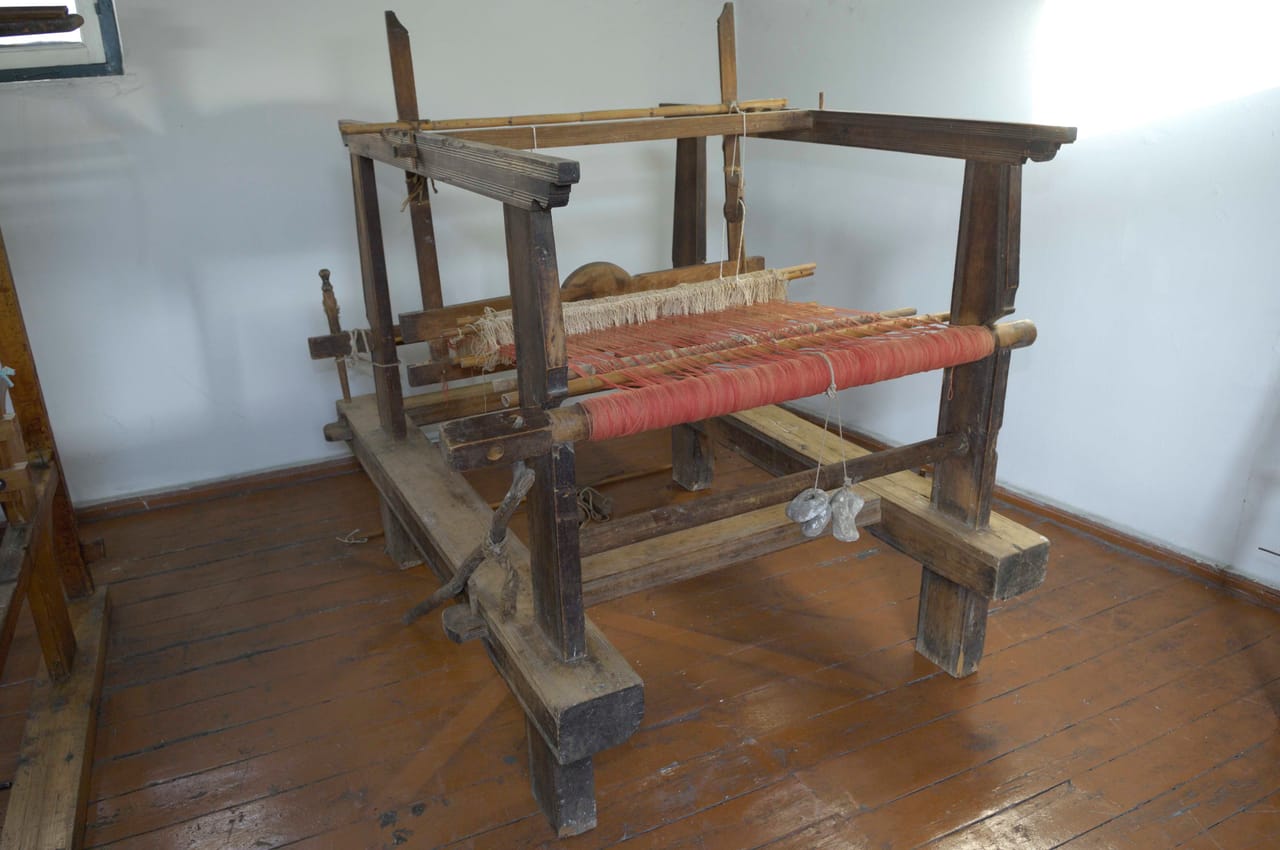
Which loom to buy
Both are well-made looms that will produce good cloth for as long as you weave on them. The decision is specific to where your weaving is now and where you expect it to go.
Choose the Baby Wolf ($2,386) if:
- Four shafts covers your current and near-future weaving plans
- Budget matters: the $2,386 entry is reasonable, and the Four-Now-Four-Later upgrade preserves optionality
- You want a US-made hardwood loom with a strong dealer and parts network
- The 54-inch depth is manageable in your space
Choose the Louet David III (from $5,087) if:
- You weave or plan to weave 8-shaft structures: deflected doubleweave, 8-shaft twills, networked drafts
- Your studio benefits from the 33.5-inch depth
- Treadle ergonomics are a priority: long sessions or joint concerns
- You are prepared for a 16-to-18-week wait and a Netherlands-built loom
A weaver coming from a rigid heddle loom or buying their first floor loom usually lands on the Baby Wolf. The David III is the right loom for a weaver who already knows they need 8 shafts and a shallower profile, and who is ready for the price and the wait. If width between 18 and 26 inches is still an open question, the Baby Wolf vs Wolf Pup comparison is the place to start before this one.