Ashford Kiwi 3 vs Traditional: Which Spinning Wheel?
Ashford Kiwi 3 vs Traditional: castle vs Saxony design, scotch tension vs double drive, and the ratio gap from 9.5:1 to 17:1. Specs verified June 2026.

For most first-time spinners, buy the Kiwi 3: a compact castle wheel with scotch tension and ratios to 9.5:1, at $629 to $799. Buy the Traditional ($829 to $1,039) if you need 17:1 for fine fibers, want double drive, or prefer the Saxony form. Prices verified June 2026.
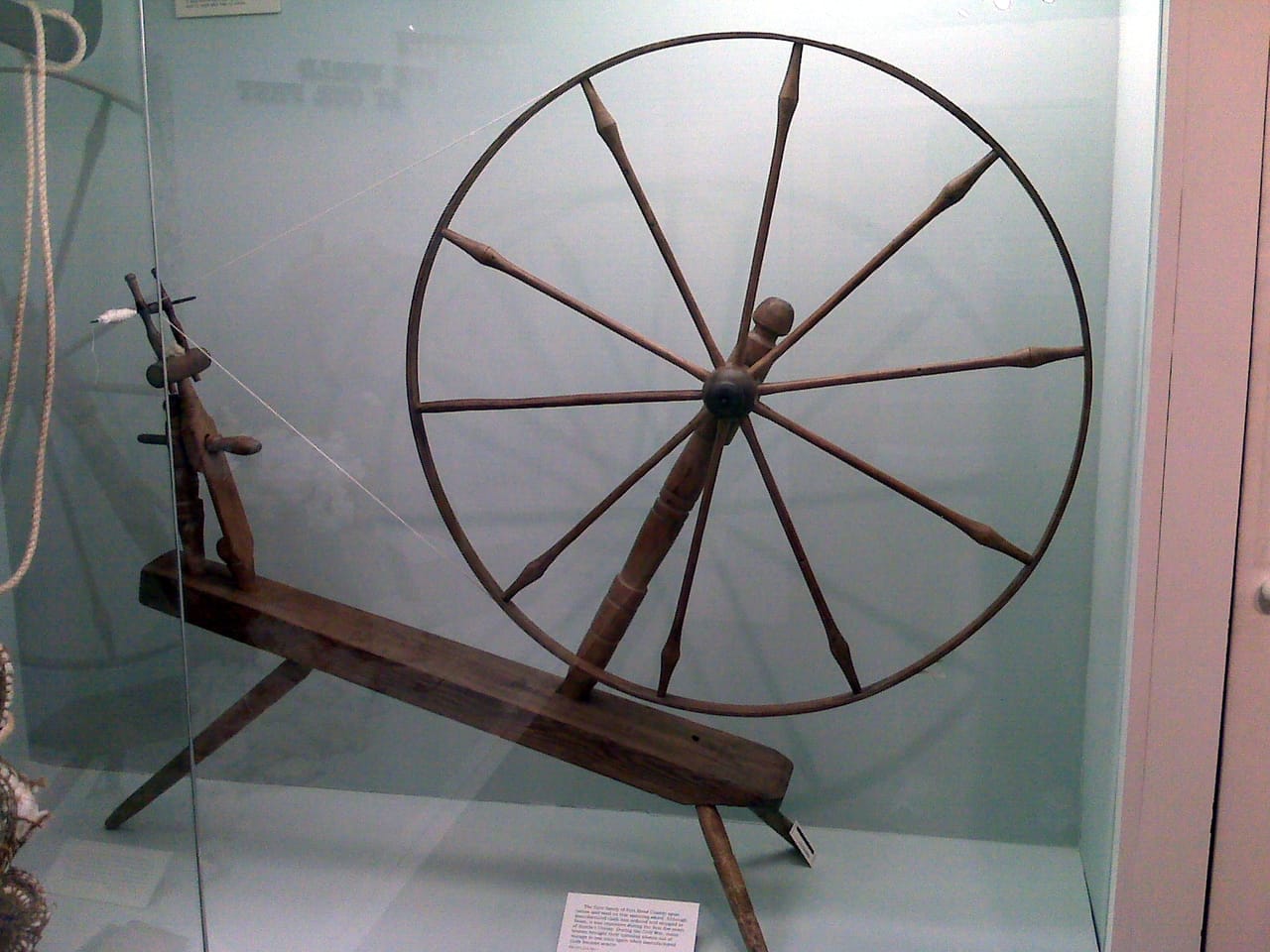
The Kiwi 3 and the Ashford Traditional solve different problems at a roughly $200 price gap. The Kiwi 3 folds for storage and reaches 15:1 only with the optional High Speed Whorl. The Traditional is a fixed Saxony wheel with single or double drive and a 22-inch drive wheel that runs high ratios smoothly. Both are Silver Beech, both made in Ashburton, New Zealand.
| Spec | Kiwi 3 | Traditional |
|---|---|---|
| Style | Castle | Saxony |
| Drive | Scotch tension (SD only) | Single or double drive |
| Standard ratios | 5.5:1, 7.5:1, 9.5:1 | 7:1, 9:1, 12:1, 17:1 (SD) |
| DD ratios | None | 7.5:1, 9.5:1, 13:1 (+16:1 bobbin-lead) |
| Optional top ratio | 15:1 (High Speed Whorl) | None |
| Bobbins included | 3 × 130g | 4 × 100g |
| Weight | 5.5 kg (12 lbs) | 8 kg (17.6 lbs) |
| Drive wheel diameter | 17.5” (44 cm) | 22” (56 cm) |
| Folds for storage | Yes | No |
| Material | Silver Beech | Silver Beech |
| Unfinished price | $629 | $829 (SD) / $879 (DD) |
| Lacquered price | $799 | $999 (SD) / $1,039 (DD) |
What is the difference between a castle and a Saxony wheel?
A castle wheel stacks the flyer-bobbin assembly above the drive wheel on a vertical frame, so it is tall, narrow, and the Kiwi 3 folds. A Saxony wheel sets the wheel and flyer side by side on a low, wide frame, so the Traditional is broader and stays put.
A castle wheel (like the Kiwi 3) stacks the flyer-bobbin assembly directly above the drive wheel on a vertical frame. The whole wheel is compact (tall rather than wide) and the Kiwi 3 adds folding double treadles so it collapses for storage. The spinner sits in front of the wheel and drafts fiber forward into the orifice.
A Saxony wheel (like the Traditional) arranges the drive wheel and flyer-bobbin assembly side by side on a low, wide horizontal frame. The spinner sits beside the wheel and drafts to the side. This geometry has been the standard for Saxony wheels since the 17th century; Ashford has manufactured the Traditional in this form continuously since 1965.
The practical difference for most spinners is footprint and feel. Castle wheels are narrower, fold, and fit in smaller spaces. Saxony wheels feel more traditional, run smoother at high ratios on their larger drive wheels, and sit lower to the floor. Neither is objectively better. The choice often comes down to which geometry feels right when you sit down at it.
Scotch tension or double drive: which should you choose?
Choose scotch tension (the Kiwi 3 and the Traditional single drive) for bulky through worsted weights and most general spinning; it is quicker to adjust mid-draft. Choose double drive (Traditional only) for very consistent fine singles, where take-up control matters most.
Both the Kiwi 3 and the Traditional single drive use scotch tension: one drive band powers the flyer whorl, and a separate spring-loaded brake band on the bobbin controls how fast yarn winds on. Adjusting take-up is a matter of tightening or loosening the bobbin brake spring. It is intuitive, quick to dial in, and works well for most fiber types and yarn weights.
The Traditional double drive variant adds a second configuration. In double drive, the same drive band wraps around both the flyer whorl and the bobbin whorl at different diameters, actively driving both rather than braking one. This gives finer control over the ratio of twist insertion to yarn wind-on. For spinning very consistent fine singles, where the difference between slightly too much and slightly too little take-up is visible in the finished yarn, double drive is the preferred tool.
For bulky through worsted weights, for art yarn, and for most general spinning, scotch tension is the more practical choice. It is easier to adjust mid-draft and tolerates a wider range of fiber types without retuning.
The Kiwi 3 offers no double drive option. If double drive is a requirement, the Traditional DD at $879 unfinished is the path.
When do you actually need the 17:1 ratio?
You need 17:1 for fine merino, high-twist lace singles, and very thin plied yarns. The Traditional reaches it on a standard whorl with no accessory; the Kiwi 3 tops out at 9.5:1, or roughly 15:1 with the optional High Speed Whorl. For worsted through DK, neither needs that ceiling.
The Kiwi 3’s three standard ratios cover 5.5:1 (bulky and thick singles), 7.5:1 (worsted weight), and 9.5:1 (DK and light worsted). Add the optional High Speed Whorl and you reach approximately 15:1. That covers sport and fingering weight, and with fine technique, it handles some lace weights.
The Traditional single drive adds a fourth whorl at 17:1. That extra jump matters for fine merino, high-twist lace singles, and very thin plied yarns. At 17:1, each treadle stroke inserts 17 twists per inch of drafted fiber. The full Ashford Traditional review covers how spinners working in lace weight use this ratio routinely.
The important nuance: reaching 17:1 on the Traditional requires no additional accessories. Reaching 15:1 on the Kiwi 3 requires purchasing the High Speed Whorl separately. If you know you will spin fine fibers consistently, the Traditional’s built-in ratio coverage is the cleaner setup. If you primarily spin worsted through DK and occasionally want finer, the Kiwi 3 with whorl upgrade is adequate and cheaper.
The wheel diameter also matters here. The Traditional’s 22-inch drive wheel delivers higher ratios more smoothly than a smaller wheel would: more circumference per revolution means the flyer runs faster relative to treadle effort at any given whorl size. The Kiwi 3’s 17.5-inch wheel works well in its range but reaches its mechanical limits sooner.
How big is the Traditional compared to the Kiwi 3?
Meaningfully bigger. The Traditional measures 32 inches wide and weighs 8 kg (17.6 lbs) on a fixed frame; the Kiwi 3 weighs 5.5 kg (12 lbs) and folds for storage. For apartments or shared spaces, the Kiwi 3’s smaller footprint is the practical advantage.
The Kiwi 3 folds. The Traditional does not. For spinners who store a wheel between sessions, share a studio, or need to move a wheel regularly, the Kiwi 3’s folding treadle design is a real feature. Folded, it is manageable in a car without a truck or roof rack.
The Traditional is a set-it-and-leave-it wheel. At 32 inches wide, 14.25 inches deep, and 33 inches tall, it occupies a permanent spot in a room. Its 8 kg does not make it unmovable, but most owners do not move it often. It is closer to furniture than to a portable instrument.
How many bobbins come with each wheel?
The Kiwi 3 ships with three 130-gram bobbins (390g total); the Traditional ships with four 100-gram bobbins (400g total). The Kiwi 3’s larger bobbins hold more per fill, while the Traditional’s extra bobbin gives you one more to load before plying.
The different capacity changes how you plan longer spinning sessions.
At 130g, a Kiwi 3 bobbin holds more yarn per fill. For a spinner working thick singles or bulky plied yarns, this means fewer bobbin-swap interruptions. For a spinner working fine singles, bobbin capacity matters less; a 100g bobbin can still hold a considerable length of fingering-weight yarn.
The Traditional’s four bobbins give you an extra one to fill before spinning stops. For plying (where you need at least two full bobbins to ply from), having four rather than three means more spinning sessions before the plying queue is empty.
Neither wheel limits you to the included bobbins. Additional bobbins are available from Ashford dealers for both models. But the difference in what ships in the box is worth knowing.
Should you consider the Schacht Ladybug instead?
Consider it if you want double drive in a compact castle form. The Ladybug offers both scotch tension and double drive at a price between the Kiwi 3 and the Traditional, so it is the direct alternative to the Traditional DD without the Saxony footprint.
Before deciding between the Kiwi 3 and the Traditional, it is worth knowing the Schacht Ladybug exists. The Ladybug is a castle wheel with both scotch tension and double drive at a price point roughly between the Kiwi 3 and Traditional. For a spinner who wants double drive but also wants the compact castle form, the Ladybug is a direct alternative to the Traditional DD without the Saxony footprint.
The Traditional’s Saxony design is its own reason to buy it. For spinners who want that form, nothing else in Ashford’s lineup substitutes. But for spinners choosing primarily on drive system, comparing the Ladybug against the Traditional DD is a useful exercise.
When does the Traditional make sense as a first wheel?
The Kiwi 3 is the practical default, but the Traditional is a valid first wheel for a specific kind of buyer.
Buy the Traditional first if: you have already spun on a Saxony wheel somewhere (a guild wheel, a borrowed wheel, a workshop) and you know the Saxony feel is what you want. You also know you will spin fine fibers and want 17:1 without an accessory purchase. And you have space for a fixed 32-inch footprint.
Buy the Kiwi 3 first if: you are new to spinning and unsure of your direction. It covers the full range of worsted through fingering weight at standard ratios, folds away when not in use, and costs $200–$300 less. If you spin it for a year and decide you want a Saxony wheel or genuinely need 17:1 consistently, you have learned enough to make that choice with conviction rather than guesswork.
The common regret among spinners who bought the Traditional first: the footprint was larger than expected for a household where spinning competes with other activities for floor space. The common regret among spinners who bought the Kiwi 3 first: deciding within two years that they wanted double drive, which the Kiwi 3 cannot provide regardless of accessories.
What do spinners upgrade to after these wheels?
Spinners who want electronic speed control move to an e-spinner; those who want more bobbin capacity in a castle form look at the Joy 2 or Traveller. Many never leave the Traditional at all.
Neither the Kiwi 3 nor the Traditional is the final word in wheel design. Spinners who want electronic speed control and treadle-free operation eventually look at the EEW e-Spinner 6. Spinners who want a larger production castle wheel with more bobbin capacity consider the Ashford Joy 2 or Traveller. The Traditional itself is a destination for many spinners. A wheel made since 1965 that can spin every fiber type across a wide ratio range is not a stepping stone for everyone. Some spinners buy one and use it for decades.
The Kiwi 3 is a starting point that does not embarrass itself. The Traditional is a more complete wheel that asks for more room.
Which one to buy
Both wheels are Silver Beech, made in Ashburton, and sold through the same authorized dealer network. Neither is a bad wheel. The decision comes down to four questions: Do you need 17:1? Do you want double drive? Do you have space for a fixed 32-inch footprint? Are you prepared for the $200–$400 price premium?
Choose the Kiwi 3 ($629–$799) if:
- You are new to spinning and want a compact, learnable entry point
- Your space requires a wheel that folds for storage
- Worsted through DK is your primary weight range
- You want to spend less to find out if spinning is your long-term activity
Choose the Traditional ($829–$1,039) if:
- You want or need 17:1 ratio for regular lace-weight spinning
- You prefer Saxony wheel geometry, or know it from experience
- You want double drive as a built-in option
- You have permanent floor space for a 32-inch-wide wheel
The full Ashford Kiwi 3 review and the full Traditional review cover each wheel’s performance in more detail. For most first-time buyers, the Kiwi 3 is the right starting answer. The Traditional rewards the spinner who already knows why they want it.