Ashford Kiwi 3 Review: Scotch Tension Spinning Wheel
The Ashford Kiwi 3 is a scotch tension spinning wheel with three ratios (5.5 to 9.5:1), folding treadles, and 130g bobbins. Unfinished $629 or lacquered $799.

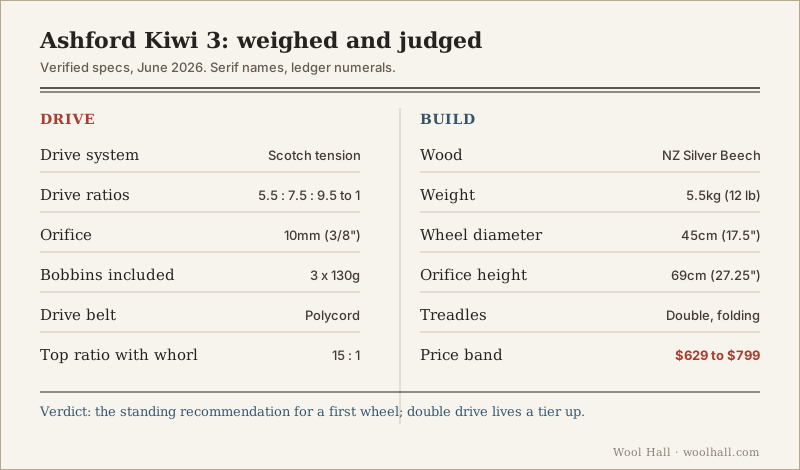
The Ashford Kiwi 3 is a scotch tension single-drive spinning wheel made in Ashburton, New Zealand from Silver Beech, available in unfinished ($629) or lacquered ($799) finishes (verified June 2026). It has three drive ratios, a 10mm orifice, folding double treadles, and ships with three 130g bobbins and a built-in lazy kate.
For the large majority of first spinning wheel buyers, the Kiwi 3 is the decision and the question is only which width. For the minority who need double drive or higher top ratios from day one, it is not.
What kind of spinning wheel is the Kiwi 3?
The Kiwi 3 is a castle-style spinning wheel. Castle wheels are upright: the flyer-bobbin assembly sits directly above the drive wheel on a vertical frame, with the treadles at the base. The alternative is the Saxony or walking wheel design, where the orifice sits to one side of the wheel. Castle wheels are more compact in footprint and more common in modern home spinning.
The Kiwi 3’s frame is New Zealand Silver Beech, a hardwood sourced from sustainably managed forests and used in Ashford’s production since the company began making spinning wheels in 1965. The drive wheel is timber-veneered MDF running on ball bearings. This is the combination that produces the characteristic quiet, smooth Ashford rotation: the MDF core is more stable than solid wood under temperature changes, and the veneer gives it the look and feel of a wood wheel.
| Spec | Kiwi 3 |
|---|---|
| Drive system | Scotch tension (single drive) |
| Drive ratios | 5.5:1, 7.5:1, 9.5:1 |
| Wheel diameter | 45cm (17.5”) |
| Orifice | 10mm (3/8”) |
| Orifice height from floor | 69cm (27.25”) |
| Bobbins included | 3 × 130g |
| Treadles | Double, folding, polyurethane hinges |
| Weight | 5.5kg (12 lb) |
| Wood | New Zealand Silver Beech |
| Drive belt | Polycord |
| Finish options | Unfinished ($629) / Lacquered ($799) |
| Made in | Ashburton, New Zealand |
Prices verified June 2026 at The Woolery, Halcyon Yarn, and Paradise Fibers. Both finishes are on Amazon (ASIN B07J3XXC57 lacquered, B07KJR7CCR unfinished).
How does scotch tension work on the Kiwi 3?
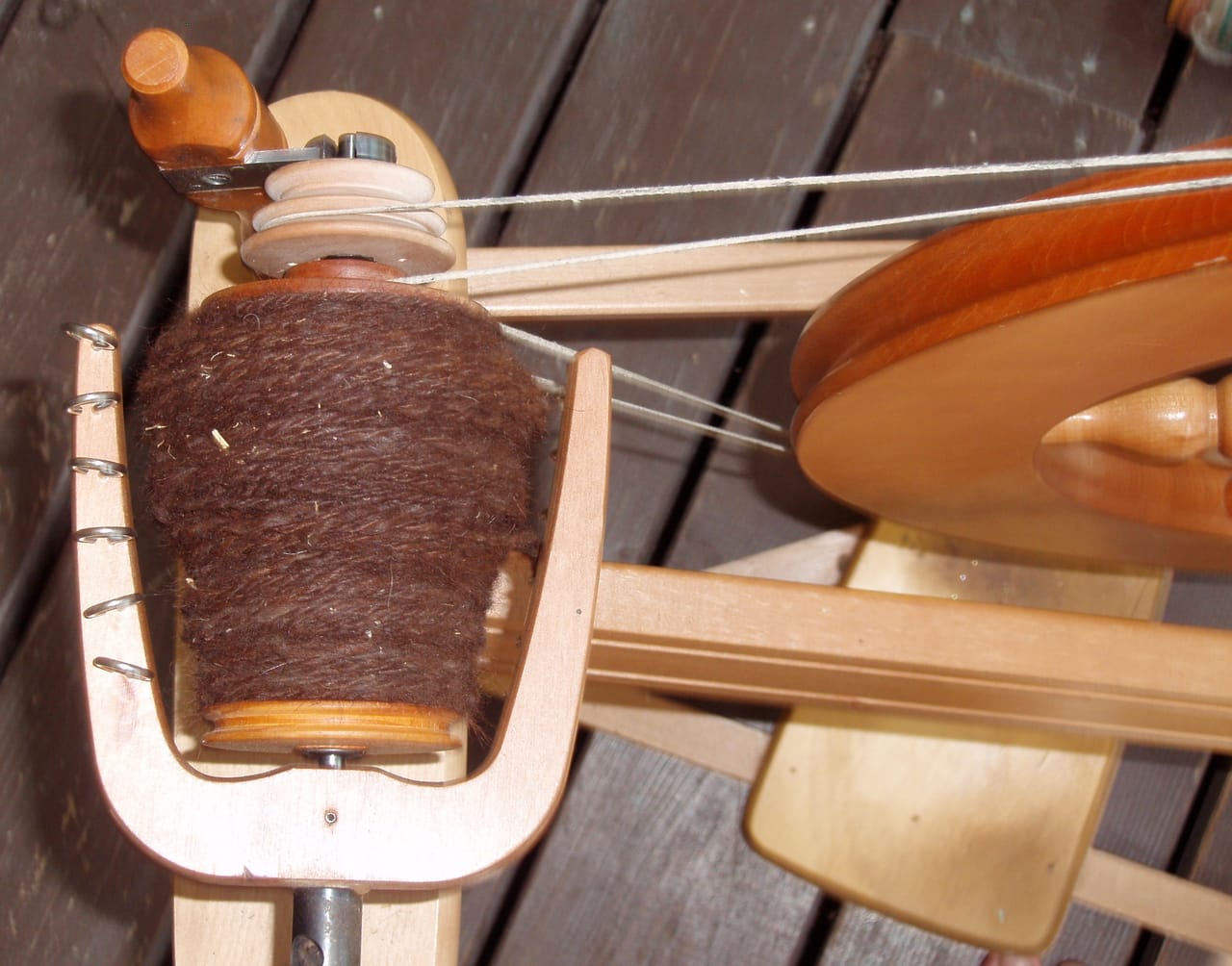
Scotch tension is a single-drive system: the drive band connects to the flyer whorl and spins the flyer. The bobbin sits on the same spindle as the flyer but is braked separately by a spring-loaded band on the bobbin whorl. Because the flyer spins faster than the braked bobbin, yarn winds onto the bobbin. The spring tension on the brake band controls how fast the yarn takes up.
To adjust: if the yarn winds on too fast (resulting in tight, compacted yarn), release some brake tension. If the yarn stays loose in the orifice instead of winding on, add brake tension. The adjustment is intuitive after a few bobbins.
The contrast with double drive (which the Traveller and Traditional offer) is that in double drive, both the flyer and the bobbin are driven by separate loops of the same drive band, using two different-sized whorls. Double drive provides more precise control of twist insertion relative to take-up, which matters for fine and lace-weight spinning where the margin between enough twist and too little twist is small. For worsted, DK, and bulky-weight yarn, scotch tension is fully adequate and simpler to set up.
What are the drive ratios and what can you spin?
The Kiwi 3’s standard flyer whorl is three-speed: 5.5:1, 7.5:1, and 9.5:1. The ratio is how many times the flyer rotates per treadle stroke. At 5.5:1, each treadle stroke inserts 5.5 twists per inch of draft: slower twist insertion, appropriate for bulky and thick-and-thin yarn where you need to draft fast. At 9.5:1, each stroke inserts 9.5 twists, appropriate for finer sport or DK weight yarn.
Most of what spinners make in their first year falls within these three ratios. Chunky scarves, lace-weight is the outer limit; worsted sweater yarn is well within the middle range. The Kiwi 3’s 9.5:1 top ratio is not limiting for the majority of what a beginner will spin.
For spinners who move into fine yarn: Ashford sells the High Speed Whorl as a separate purchase for approximately $48. It gives ratios of 7.5:1, 10:1, and 15:1. At 15:1, fine singles for lace weight are achievable on the Kiwi 3 with the whorl upgrade. The High Speed Whorl fits Kiwi 1, 2, and 3.
How portable and easy to set up is the Kiwi 3?
The Kiwi 3 weighs 5.5kg (12 lb). Its double treadles fold flat for transport. This is a meaningful feature: before the Kiwi 3, folding treadles were exclusive to the more expensive Ashford Joy. The wheel sets up from the box in roughly 15 to 30 minutes and folds for a carry bag.
The wheel is not a pocket-sized travel wheel, but it is genuinely portable compared to most floor-standing spinning wheels. Spinners who bring a wheel to spinning guilds, retreats, and workshops find it manageable in a car.
Assembly requires an Allen key (included). The first-time assembly includes tensioning the drive band, threading the orifice, and setting the scotch tension for your first fiber. Ashford’s included Learn to Spin booklet covers all of this. The orifice hook (also included) threads the yarn from the orifice through the flyer hooks to the bobbin.
What is the Kiwi Super Flyer and do you need it?
Ashford calls the large-orifice upgrade the Kiwi Super Flyer (not “jumbo flyer”; that is a common informal name, not Ashford’s product term). It replaces everything from the maiden bar upward: the flyer arms, the orifice, the bobbin whorl, and the bobbins themselves.
The standard flyer has a 10mm (3/8-inch) orifice. The Super Flyer has a 27mm (1-1/8 inch) orifice. Standard bobbins hold 130g. Super bobbins hold 500g. The kit comes with 3 super bobbins, a lazy kate, and drive components, at approximately $380 (The Woolery, verified June 2026).
What it enables: art yarn with thick-and-thin, coils, and embedded texture; true bulky singles that would not fit through the standard orifice; core-spun yarn with thick cores; plying multiple heavy singles together. What it does not do: it is not suited to fine or delicate fibers. The super flyer is a large-format tool, and spinners report it struggles with anything thinner than chunky.
Most spinners do not need the Super Flyer on their first wheel. If you spin art yarn or bulky regularly, the upgrade path is straightforward and reasonably priced. If you are unsure whether you will spin bulky, wait and buy it later when the need is clear.
When do you outgrow the Kiwi 3 and what comes next?
The Kiwi 3 is a scotch tension single-drive wheel. That is its limitation and the reason some spinners eventually step up. The specific trigger moments:
When you want double drive. The Kiwi 3 cannot do double drive. In double drive, the bobbin and flyer are connected to separate whorls on the same drive band, giving more precise control over twist-to-take-up ratio. Spinners who work consistently at lace-weight or who spin tightly controlled fine singles find double drive smoother. The Traveller adds it.
When you want higher standard ratios. With the High Speed Whorl, the Kiwi 3 reaches 15:1. The Ashford Traveller in single drive reaches 14:1, and in bobbin-lead (Irish tension) double drive reaches 13:1. The Ashford Traditional in single drive reaches 17:1. For serious fine-yarn spinning without the whorl upgrade, the Traditional is the natural destination.
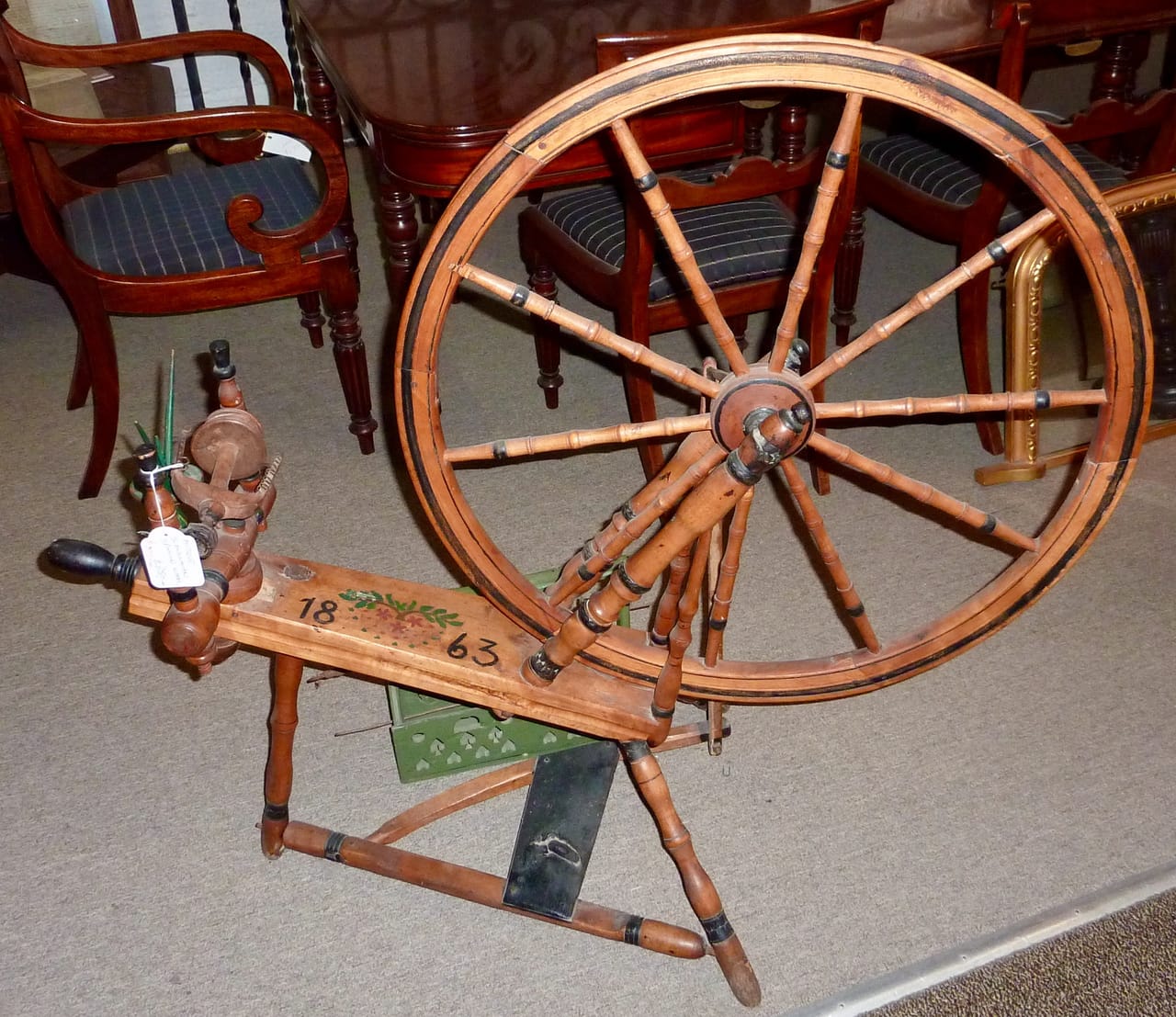
When you want a Saxony-style aesthetic. Some spinners want a horizontal wheel with the orifice to the side. The Kiwi 3 is a castle wheel. The Traditional is a Saxony. These are entirely different visual profiles and the choice is often personal.
The most common step-up path from the Kiwi 3 is the Ashford Traveller. It adds both scotch and double drive options (switchable), offers ratios to 14:1 in single drive, and maintains the same brand ecosystem as the Kiwi 3 so accessories carry over. The Traveller’s bobbin capacity (100g each) is actually lower than the Kiwi 3’s 130g bobbins, which occasionally surprises spinners used to the Kiwi 3’s depth.
Spinners who came from a drop spindle before the Kiwi 3 rarely feel ready to step up to the Traveller or Traditional in the first year. The Kiwi 3’s range covers most of what you want to learn in that time. The step-up decision typically comes after you know what weight you spin most often and whether single drive is limiting you in practice.
If you pair the Kiwi 3 with a drum carder for fiber prep, it handles a wide range of wools, alpaca, and blends without strain. The 10mm orifice is the main fiber limiter rather than the drive system. For everything that fits the orifice, the Kiwi 3 is a capable and long-lived production wheel.
The Kiwi 3 is available from Ashford’s US dealer network. Dealers include The Woolery, Halcyon Yarn, Paradise Fibers, and regional fiber stores that carry Ashford products. The Ashford Rigid Heddle review covers the brand’s weaving side if you are considering the Ashford ecosystem for both spinning and weaving.